
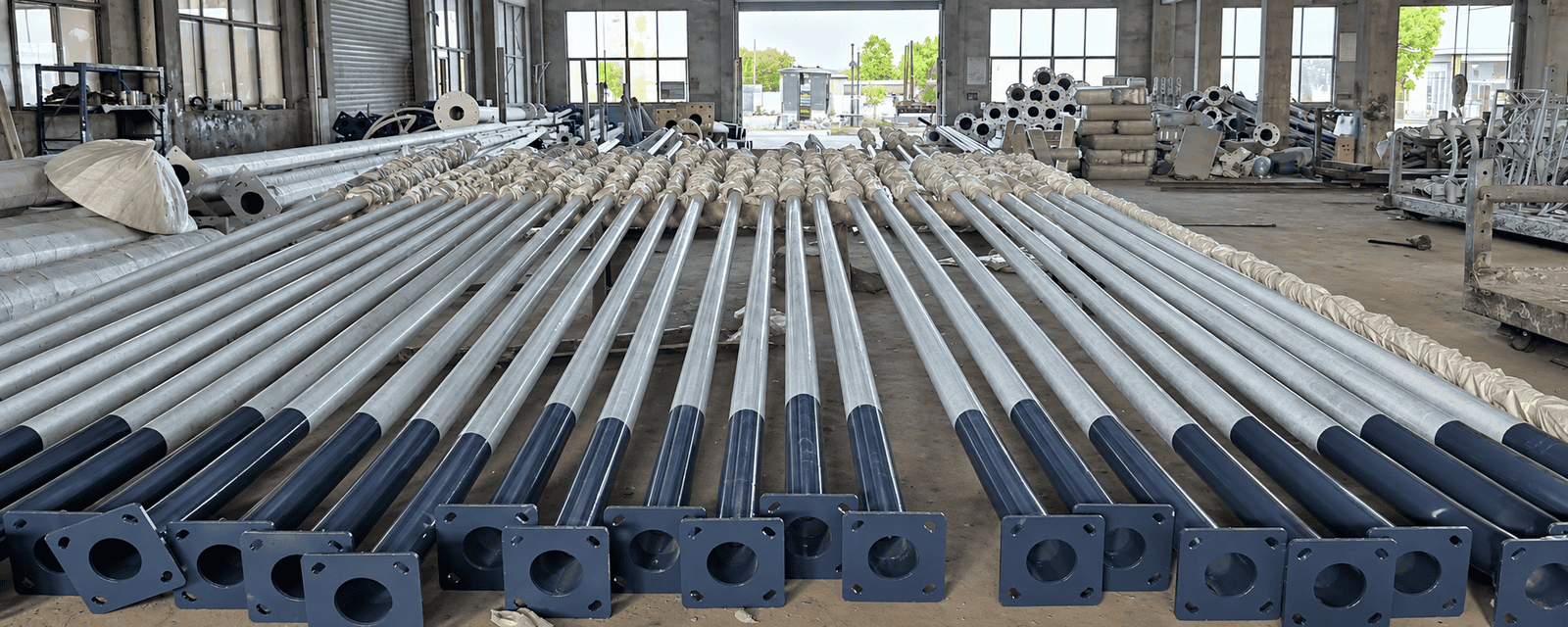
Selecting a street light pole manufacturer is an engineering and delivery decision, not only a price comparison. A pole that looks acceptable in a quotation can still create risk through incorrect wind-load assumptions, weak flange welding, poor corrosion protection, incomplete grounding, or packaging that cannot survive export handling.
For municipal roads, solar street lighting, highways, industrial parks, and urban landscape projects, compare suppliers against the same evidence-based criteria: product fit, material choice, structural design, manufacturing control, corrosion protection, quality documentation, project experience, delivery capability, and after-sales support.
1. Start with the project specification, not the supplier list
Before contacting a street light pole manufacturer, define the conditions the pole must meet. A supplier cannot price or engineer the correct product from height alone.
Prepare these inputs for the RFQ:
– Pole height and arm configuration, such as single arm, double arm, high mast, or decorative design.
– Luminaire type, weight, projected area, mounting angle, and cable-entry requirements.
– Wind speed, terrain exposure, seismic requirements, and any local design code.
– Foundation, anchor-bolt pattern, flange dimensions, and access-door position.
– Material and finish requirements, including galvanized steel, powder coating, color, and coastal or high-corrosion exposure.
– Required quantity, delivery destination, packaging constraints, installation scope, and target schedule.
The structural strength of a pole depends on the approved drawing, load calculation, pole geometry, wall thickness, flange design, luminaire load, and site conditions. A generic “heavy-duty” label is not a substitute for these inputs.
2. Match the pole material to the application
Material is one of the first differences buyers see when comparing street light pole manufacturers. The correct choice depends on structural load, corrosion exposure, appearance, transport, and the installation method.
– **Steel:** A practical choice for roadways, high-mast lighting, highway projects, and applications that need high structural stiffness. Steel poles normally require a defined corrosion-protection system, such as hot-dip galvanizing, paint, or powder coating.
– **Aluminum:** Useful when low weight, corrosion resistance, or a decorative appearance is important. Confirm the alloy, temper, connection design, and wind-load basis rather than comparing aluminum and steel by price per piece.
– **Fiberglass or composite:** Worth considering where low weight, electrical isolation, or resistance to specific corrosive environments is important. Ask for the design standard, UV performance, impact data, and long-term inspection method.
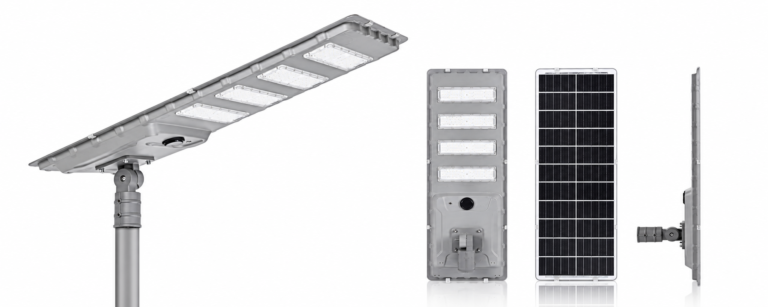
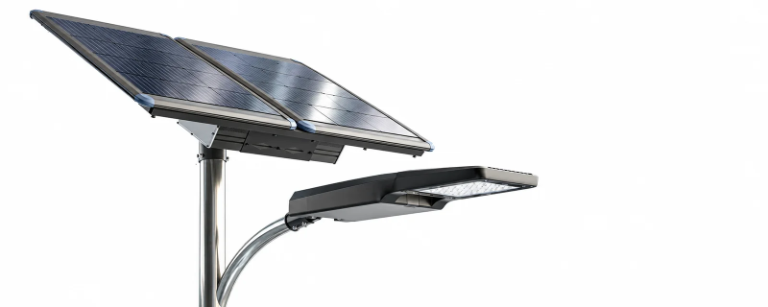
For solar street lights, also check whether the pole is supporting a larger projected area from the panel, luminaire, and battery enclosure. The pole material cannot be evaluated separately from the complete solar-lighting assembly.
Ask each supplier to quote the material, grade, wall thickness, finish, weight, and design assumptions in the same format. This prevents a low-cost quotation from silently changing the material or reducing the corrosion-protection scope.
3. Verify that the manufacturer can engineer your pole configuration
A reliable supplier should be able to translate your lighting layout into controlled drawings and a production specification. Ask for a drawing showing the pole height, taper, wall thickness, arm length, flange, bolt circle, maintenance door, cable holes, and luminaire connection.
Ask the supplier:
1. Which dimensions are standard and which can be customized?
2. How are wind load, luminaire weight, arm projection, and foundation loads considered?
3. What drawing revision will be used for production and inspection?
4. How are changes approved after the quotation?
Red flags include a quotation with no drawing reference, a supplier that refuses to state the material grade or wall thickness, and a promise of a universal pole for different wind zones without a load calculation.
4. Check the raw material and forming process
Material traceability starts before welding. For steel street light poles, request the material grade, mill certificate or inspection record, coil or plate thickness, and the incoming-material inspection method.
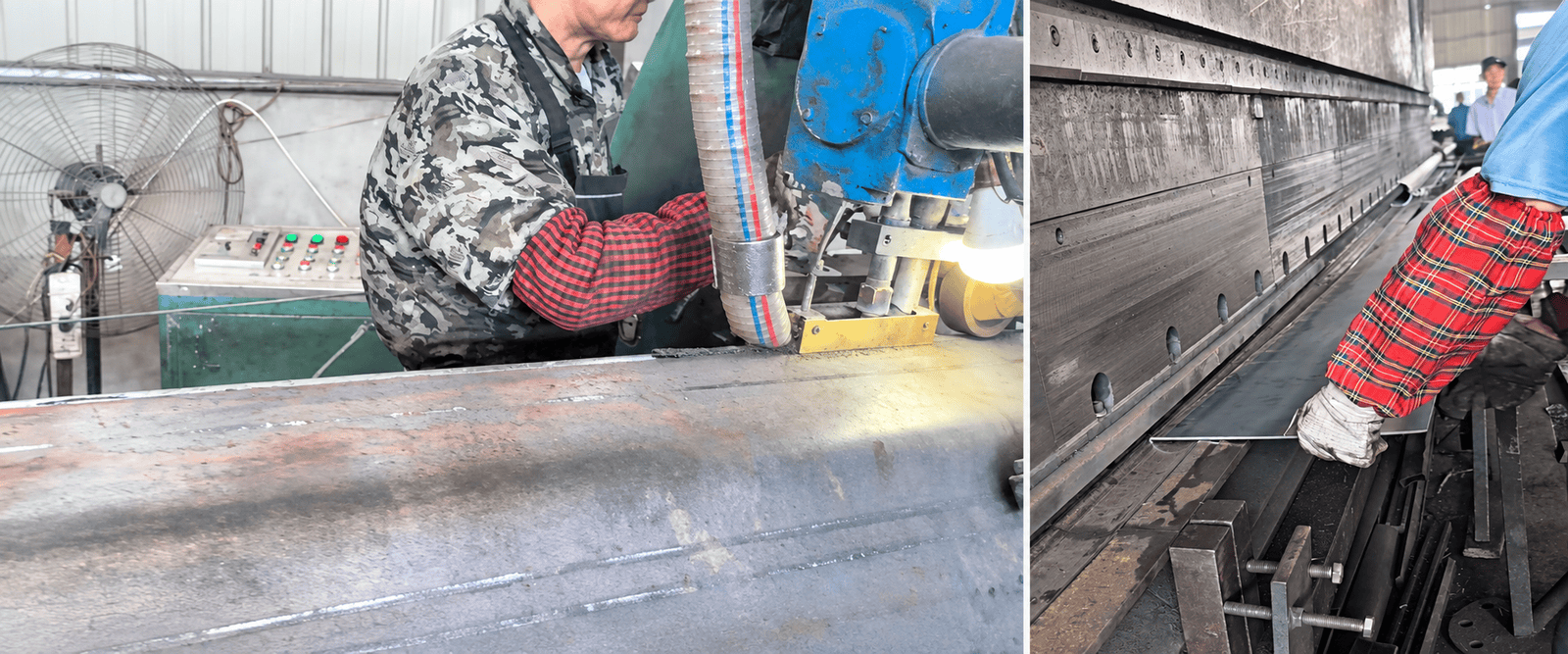
One documented manufacturing route uses Q235 steel coil, followed by leveling, cut-to-length processing, CNC bending, automatic end closing, longitudinal welding, rounding, straightening, and machining of access doors and process holes. This sequence helps the buyer understand which operations control geometry and which control weld quality.
Ask for evidence of:
– Material grade and thickness against the approved drawing.
– CNC press-brake or equivalent forming capability for the specified pole length.
– Dimensional checks after bending, rounding, and straightening.
– A production traveler or inspection record linking the batch to the drawing revision.
The goal is not to require one specific machine brand. The goal is to confirm that the supplier has a repeatable process for producing the required taper, straightness, flange fit, and arm geometry.
5. Inspect welding and flange construction
The pole body and flange are structural components. Ask how the longitudinal seam is welded, how welds are inspected, and how the flange is aligned with the pole.
Useful RFQ and inspection questions include:
– Is the main pole made without transverse seams?
– Which shielding-gas process is used for the longitudinal weld?
– What visual or dimensional acceptance criteria apply to porosity, cracks, undercut, missed welds, and burn-through?
– Are the flange and pole welded continuously on both sides?
– How are flange perpendicularity, bolt-hole position, and weld location checked?
– Are stiffeners added when required by the drawing or structural calculation?
For one documented street-light-pole specification, the target limits include flange welding-position deviation of no more than 2 mm, flange-to-pole perpendicularity within 1%, pole straightness below 1 per mille, and pole bending below 5 per mille. Treat these as project requirements to be confirmed against the approved drawing and applicable standards, not as universal limits for every design.
6. Evaluate corrosion protection as a complete system
Outdoor poles fail early when corrosion protection is treated as a cosmetic finish. Review the complete sequence: surface preparation, internal and external hot-dip galvanizing, cooling or passivation, inspection, powder-coating preparation, electrostatic coating, curing, and final inspection.
Ask the street light pole supplier to provide:
– The specified average galvanized-coating thickness and measurement method.
– Confirmation that both internal and external surfaces are treated where the design requires it.
– A powder-coating specification covering thickness, adhesion, hardness, color, and weather resistance.
– Photos or records showing how bare spots, runs, zinc lumps, blisters, exposed substrate, and cracking are handled.
– A repair procedure for damaged coating after handling or installation.
For one documented pole range, the target is an average hot-dip galvanized layer of at least 80 micrometers and a powder-coating layer of at least 80 micrometers. The specification also references Grade 0 adhesion under GB/T 9286 and a coating hardness target of at least 2H. Confirm the applicable standard and acceptance method for the destination market before placing the order.
For coastal, industrial, or high-humidity sites, ask the manufacturer to explain how the finish is adapted to the exposure class. A low unit price that omits internal protection, surface preparation, or coating inspection can become a higher total cost after installation.
7. Confirm electrical safety and maintenance access
Every pole should support safe cable routing, inspection, grounding, and future maintenance. Review the maintenance-door size and location, lock or fastener type, internal electrical mounting plate, terminal arrangement, cable-entry holes, and grounding point.
One documented pole specification includes a weather-resistant maintenance door secured with anti-theft hex-socket bolts, a dedicated grounding bolt, and a grounding-resistance requirement of no more than 10 ohms. These details should appear in the drawing and inspection plan when they apply to the project.
Ask for a marked-up drawing that shows:
– Maintenance-door clear opening and working space.
– Electrical mounting bracket and terminal position.
– Grounding-bolt location and connection method.
– Cable entry and drainage provisions.
– Protection measures that prevent installation from damaging the galvanized or powder-coated surface.
8. Request measurable quality records, not only certificates
Certificates are useful, but they do not replace product-specific inspection records. A supplier evaluation should combine management-system evidence with physical-product evidence.
Request, as applicable:
– Business license and manufacturing or trading registration.
– Quality, environmental, and occupational-health-and-safety management certificates.
– Product certifications required in the destination market, such as CCC, CQC, CE, or RoHS where relevant.
– Material certificates and incoming inspection records.
– Weld, dimension, flange-hole, coating-thickness, adhesion, and appearance inspection records.
– Packing photos and a final release checklist.
Check that the legal entity on the certificates matches the entity signing the quotation and receiving payment. If manufacturing is subcontracted, identify which operations are performed in-house and which are handled by partner facilities, including hot-dip galvanizing.
9. Use project experience to test delivery fit
Look for experience that resembles your project in product complexity and delivery conditions, not only a long list of unrelated customer names. Ask for anonymized purchase orders, inspection reports, delivery records, or reference contacts when commercial confidentiality allows.
Relevant evidence may include:
– Municipal road-lighting projects involving pole and luminaire manufacturing and installation.
– High-speed-road or interchange projects involving gantries, camera poles, or traffic structures.
– Solar-lighting projects that require coordination between poles, luminaires, batteries, controllers, and foundations.
– Export packing and delivery records for comparable quantities and lengths.
Borui’s documented project experience includes road-lighting and pole/luminaire manufacturing-and-installation work in Beijing, road-lighting infrastructure work in Hubei and Shandong, and highway traffic-structure supply contracts from 2020 through 2024. These examples indicate experience with municipal lighting and traffic-infrastructure workflows, while the buyer should still request project-specific proof for the intended country and specification.
10. Compare total delivered cost instead of pole price alone
When evaluating a street light pole price, normalize the quotation before comparing suppliers. Include:
– Steel grade, thickness, pole height, arm type, and flange configuration.
– Galvanizing and powder-coating scope and measured thickness.
– Accessories, grounding hardware, anchor bolts, brackets, and doors.
– Inspection, testing, export packing, loading, inland transport, and ocean freight assumptions.
– Installation, supervision, spare parts, warranty, and replacement responsibility.
Ask each supplier to separate one-time engineering or tooling charges from the per-pole price. Also ask for a validity period and a clear adjustment mechanism for steel, freight, or exchange-rate changes. A very low price may indicate a thinner wall, reduced coating scope, excluded accessories, or a different delivery basis.
11. Review capacity, lead time, and packaging risk
Lead time should be tied to milestones rather than a single optimistic number. Confirm the dates for drawing approval, raw-material release, first-article inspection, mass production, surface treatment, final inspection, packing, and dispatch.
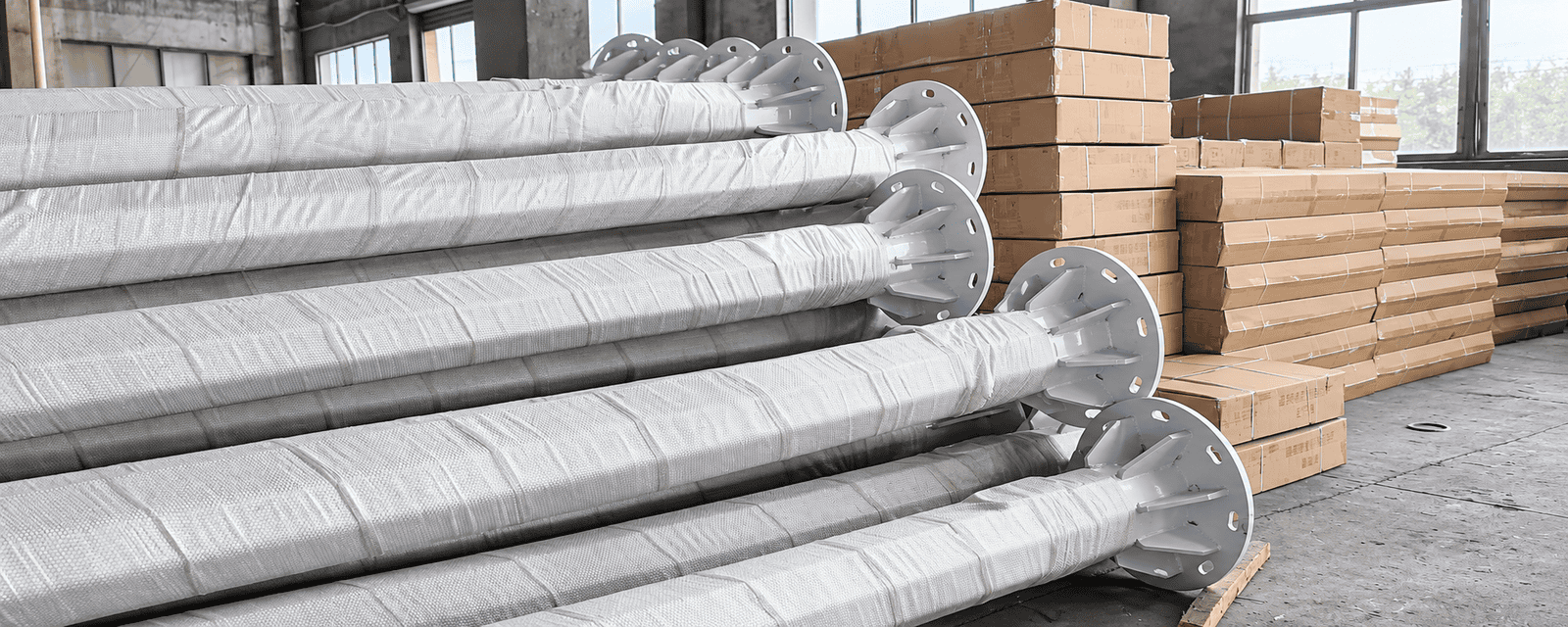
For long or tapered poles, packaging is part of product quality. Ask how sections are separated, protected against scratches, supported during lifting, and labeled for installation. Request loading photos and maximum bundle dimensions so the freight forwarder can validate the transport plan.
Red flags include a lead time that starts before drawing approval, no first-article checkpoint, unclear responsibility for galvanizing delays, and packaging that does not account for flange plates or protruding arms.
A practical street light pole supplier scorecard
Use the following scorecard as a starting point and adapt the weights to your project. Score each supplier from 0 to 5, where 0 means no usable evidence and 5 means complete, current, project-relevant evidence.
| Criterion | Suggested weight | Evidence to review |
|—|—:|—|
| Engineering and drawing control | 20% | Approved drawings, load calculations, revision control |
| Material and structural manufacturing | 15% | Material records, forming process, dimensional checks |
| Welding and flange quality | 15% | Weld criteria, inspection records, flange measurements |
| Corrosion protection | 15% | Galvanizing and powder-coating specifications and test records |
| Compliance and traceability | 10% | Legal entity, management systems, product certifications |
| Similar project experience | 10% | Comparable project records and delivery evidence |
| Delivery and packaging | 10% | Milestones, capacity plan, packing and loading method |
| Service and commercial clarity | 5% | Warranty, spare parts, communication, quotation scope |
Do not award a high overall score if a critical safety or compliance item has no evidence. For example, a competitive price cannot compensate for missing structural calculations, unverified coating scope, or an unclear legal entity.
RFQ questions to send a street light pole manufacturer
1. Please confirm the steel grade, wall thickness, pole height, arm geometry, flange dimensions, and design wind speed used for this quotation.
2. Please provide the production drawing and identify the revision that will control manufacturing.
3. What are your acceptance criteria for longitudinal welds, flange alignment, straightness, and bolt-hole position?
4. What galvanized and powder-coating thicknesses are included, and how will they be measured?
5. Please confirm whether internal and external galvanizing are included for this design.
6. Which inspection records will be supplied with the shipment?
7. Which operations are performed in your own facility and which are subcontracted?
8. Please provide a milestone schedule from drawing approval to dispatch.
9. How will the poles be protected during lifting, loading, ocean transport, and unloading?
10. What warranty, replacement, and technical-support terms apply after delivery?
Why Yangzhou Borui can be considered for a qualified shortlist
Yangzhou Borui Optoelectronic Lighting Co., Ltd. combines design, manufacturing, and installation capabilities for municipal road lighting, urban landscape lighting, and new-energy solar lighting projects. Its documented product scope includes solar street lights, high-power LED luminaires, high-mast lights, urban road and landscape lighting, smart street lights, and related traffic and tower structures.
For its documented street-light-pole process, Borui specifies Q235 steel coil, CNC forming, automatic welding, inner-and-outer hot-dip galvanizing, and weather-resistant powder coating. The technical information also identifies project parameters such as a design wind-speed target of at least 36 m/s, galvanized and powder-coating thicknesses of at least 80 micrometers, a dedicated grounding bolt, and a design service-life target of 20 years or more, subject to approved drawings, load calculations, contract requirements, and applicable standards.
Borui’s qualification portfolio includes quality, environmental, occupational-health-and-safety, CCC, CQC, CE, RoHS, and salt-spray-related documentation, along with project records from 2020-2024. Buyers should request the current certificate copies, verify the issuing entity and validity, and confirm that the exact pole configuration and destination-market requirements are covered before order placement.
Final due-diligence checklist
Before selecting a street light pole supplier, confirm that you have:
– A project-specific drawing and load basis.
– Material grade, thickness, and traceability evidence.
– Weld and flange inspection criteria.
– Galvanizing and powder-coating specifications with measurable acceptance limits.
– Maintenance-door, grounding, and cable-entry details.
– Current legal, quality, and destination-market compliance documents.
– Comparable project and delivery evidence.
– A milestone schedule, packaging plan, and inspection hold points.
– A quotation that clearly states inclusions, exclusions, delivery terms, warranty, and replacement responsibility.
The strongest manufacturer is the one that can make its engineering assumptions, process controls, inspection records, and delivery responsibilities visible before production starts. Use that standard to compare every `street light pole manufacturer` and `street light pole supplier`, then select the supplier whose evidence fits your project risk profile rather than the supplier with the lowest headline price.
Contact Yangzhou Borui for a project-specific street light pole drawing, technical proposal, and quotation based on your pole height, luminaire load, wind conditions, finish requirements, quantity, and delivery destination.

Written by
sonycao1975@gmail.com
Solar energy specialist at Jinborui Electric Co., Ltd. -- delivering reliable photovoltaic solutions for government and engineering projects worldwide.
Leave a Reply